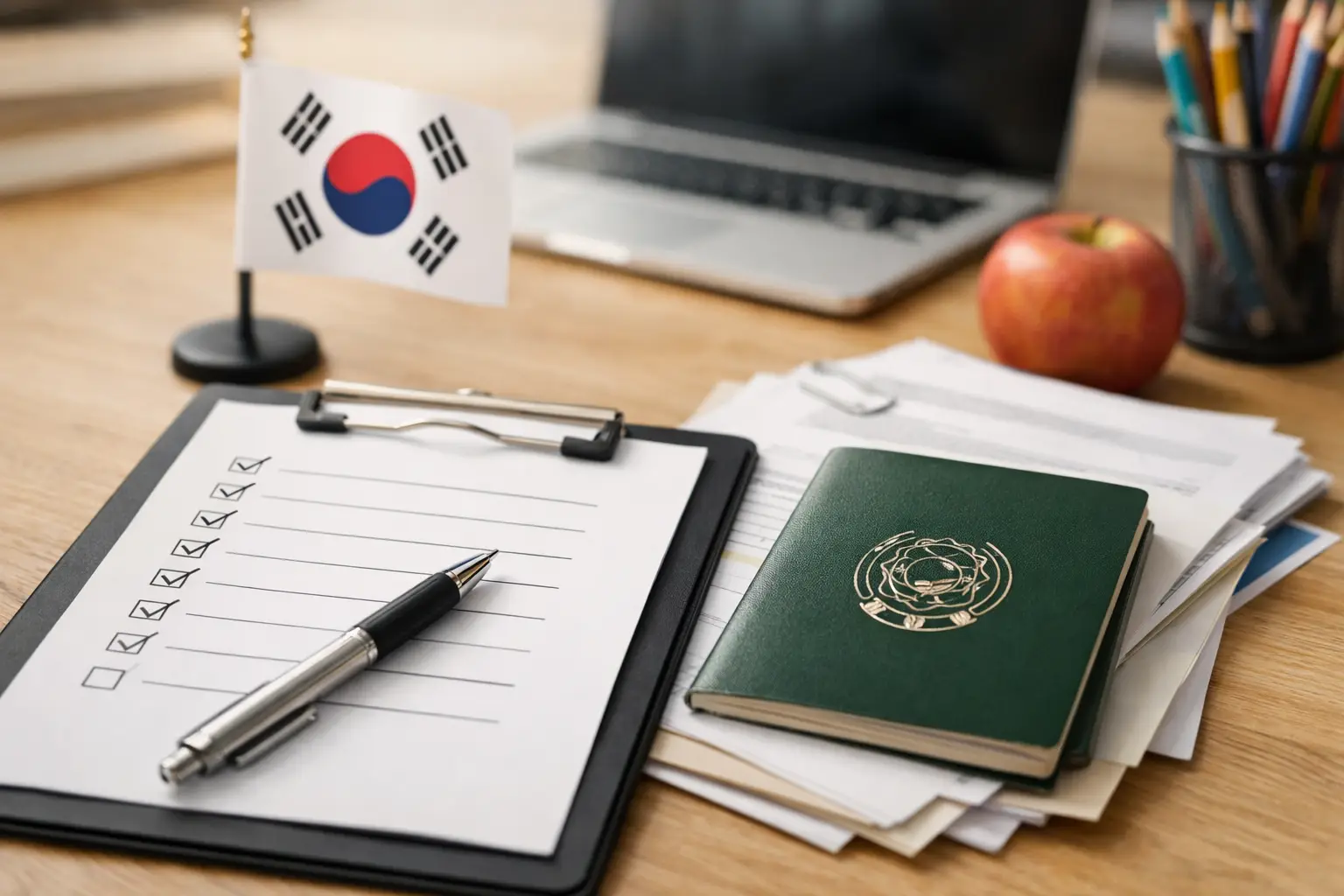
The fastest way to turn an exciting Korea job offer into a frustrating delay is simple: one missing document. That is why the best documents checklist for Korea teachers is not just a nice extra. It is the difference between a smooth visa process and weeks of back-and-forth with recruiters, schools, and consulates.
Most teachers are juggling a lot at once when they accept a position in South Korea. They are comparing contracts, preparing to move abroad, planning finances, and trying to understand what an E-2 visa actually requires. Paperwork often becomes the part people underestimate. A document may need an apostille, an original signature, a sealed transcript, or a specific issue date. If one item is wrong, everything behind it can slow down.
Why the best documents checklist for Korea teachers matters
Korea hiring moves in stages, and your documents do not all get used at the same time. Some are needed early so a school can review your eligibility. Others are required for visa issuance, and a few are practical items that make arrival easier once you land. Treating all paperwork as one big pile usually creates confusion.
A better approach is to think in three layers: job application documents, visa documents, and travel or arrival documents. That helps you prioritize what needs immediate attention and what can wait until your start date is confirmed.
There is also a timing issue that catches many applicants off guard. Criminal background checks, apostilles, and passport renewals can take longer than expected. If your school wants a quick start date, a slow document process can cost you a position. Good schools plan ahead, but they still need teachers who can submit complete, accurate paperwork.
Start with the core hiring documents
Before a school can seriously consider your application, it usually wants a clear snapshot of your qualifications. In most cases, that means a current resume, a passport copy, a recent photo, and proof of your degree status. Some employers may also ask for reference letters or a short self-introduction.
Your resume should be straightforward and easy to review. Korean schools are often scanning for teaching experience, childcare work, tutoring, camp leadership, certifications, and anything that shows you can manage a classroom. Even if you are a first-time teacher, relevant experience still counts.
Your passport matters more than many first-time applicants realize. If it is close to expiring, renew it early. A passport with limited validity can create problems later in the visa process, and changing passport details mid-application is annoying for everyone involved.
A digital copy of your diploma is often enough for the early stage, but do not assume that means the original degree process will be easy later. Schools may interview and even offer a contract based on scans, yet the official visa process usually requires more formal documentation.
The visa documents that usually create delays
When people talk about paperwork problems, they are usually talking about visa paperwork. This is the section of the best documents checklist for Korea teachers that deserves the most attention.
Passport
You need a valid passport, and it should have enough remaining validity for your planned stay. If your passport is damaged, nearly full, or expiring soon, fix that first. It is one of the few items that affects every later step.
Bachelor’s degree copy
For most E-2 teaching positions, you will need a copy of your bachelor’s degree. In many cases, that copy must be notarized and apostilled, depending on your nationality and the current processing rules. This is where teachers often lose time by ordering the wrong type of certification or sending paperwork to the wrong office.
Criminal background check
This is the document that causes the most anxiety because it can take time and must usually meet strict standards. The check generally needs to be national-level, not state or local, and it may also need an apostille. Timing matters here. If you request it too late, your job start date may slip. If you request it too early, it may fall outside the valid window by the time your visa is processed.
Sealed transcripts
Some schools or immigration steps may ask for sealed university transcripts. Not every employer prioritizes them in the same way, but they are worth ordering early because universities do not always move quickly. Having a few sealed copies ready can save stress.
Visa application forms and passport photos
These sound minor, but minor items still delay applications when they are incomplete. Use recent passport-style photos that meet the required format. Fill out forms carefully and consistently. If your address history, passport number, or degree dates do not match across documents, expect questions.
What teachers often forget
The most useful checklist is not just about required items. It also covers the documents that people forget until the last minute.
A signed contract is one of them. Once you accept a job, keep a clean digital copy and a printed copy. You may need it for your records, travel planning, housing questions, or airport pickup coordination.
TEFL or TESOL certificates are another commonly overlooked item. Not every job requires one, but if your school considered it part of your profile, keep the certificate accessible. It may help during onboarding or payroll setup, and it is good to have if you later switch roles.
Reference letters are not always part of immigration, but they are useful when comparing opportunities or applying again in the future. If you have strong references now, collect them before you move. It is much easier than chasing them from overseas.
Vaccination or medical documents can also come up depending on employer policy or health screening procedures. Requirements can shift, so this is one area where it depends on the school and current regulations. Do not assume every teacher will need the same health paperwork, but do ask early.
How to organize your checklist without making it complicated
Teachers usually do best with one master folder and two backups. Keep a digital folder on your computer, a cloud backup, and a printed file with originals or certified copies. Name your files clearly. “Diploma-final-final-new” is not helpful when someone needs a document the same day.
Use simple labels such as passport, diploma apostille, background check apostille, transcripts, signed contract, and visa forms. Save scans in PDF format unless a recruiter or consulate asks for something else. Clear, readable scans speed things up.
It also helps to track expiration and issue dates. Background checks and some administrative documents may only be valid for a limited period. A document can be technically correct but still unusable if it is too old when submitted.
A realistic timeline for document prep
The safest move is to begin document collection before you start interviewing seriously. That may feel early, but Korea hiring can move fast once a school finds the right candidate.
If you are in the research phase, make sure your passport is valid and your resume is ready. If you are actively applying, start checking degree copy and transcript requirements. Once interviews begin, move on your criminal background check if your timing lines up with the expected hiring season.
This is where experienced guidance matters. Some teachers wait until they sign a contract to begin everything, which can work if processing times are short. Others start too early and end up redoing documents. The right timing depends on your nationality, where your documents are issued, and how quickly your target start date is approaching.
Common mistakes that turn into avoidable delays
One common mistake is assuming a scan is enough because it was enough for the interview stage. Another is getting a local background check when a national one is required. Teachers also run into trouble when names do not match exactly across documents, especially if a middle name appears on one item but not another.
Apostille mistakes are another big one. The document might be genuine, but if it was notarized incorrectly or sent to the wrong authority, it may have to be redone. That can cost both time and money.
Then there is the simple issue of waiting too long. Schools in Korea often need to fill positions on a schedule. If your paperwork is not moving, they may not be able to hold the job indefinitely, even if they like you.
Best documents checklist for Korea teachers before departure
Once your visa is approved, your focus shifts from eligibility to arrival. Keep your passport, visa paperwork, contract copy, school contact details, address information, and flight details in one easy-to-reach folder. Bring both printed copies and digital backups.
You should also carry basic academic and employment records, even if you do not expect to use them right away. Problems are rare, but travel days are not the time to discover that your important files are sitting on a laptop you packed in checked luggage.
For many teachers, this final stage is where the process starts to feel real. You are no longer just collecting paperwork. You are getting ready to start work, move into housing, and settle into a new country. Having organized documents makes that transition much calmer.
If you are working with a recruiter that specializes in Korea placements, this is also the point where support can make a noticeable difference. PlanetESL, for example, helps teachers understand what is actually required, what can wait, and what needs extra attention so small paperwork issues do not become major setbacks.
The best checklist is not the longest one. It is the one that helps you act early, stay organized, and ask questions before a missing paper holds up your plans. If Korea is your next step, your documents should be working for you, not chasing you at the last minute.