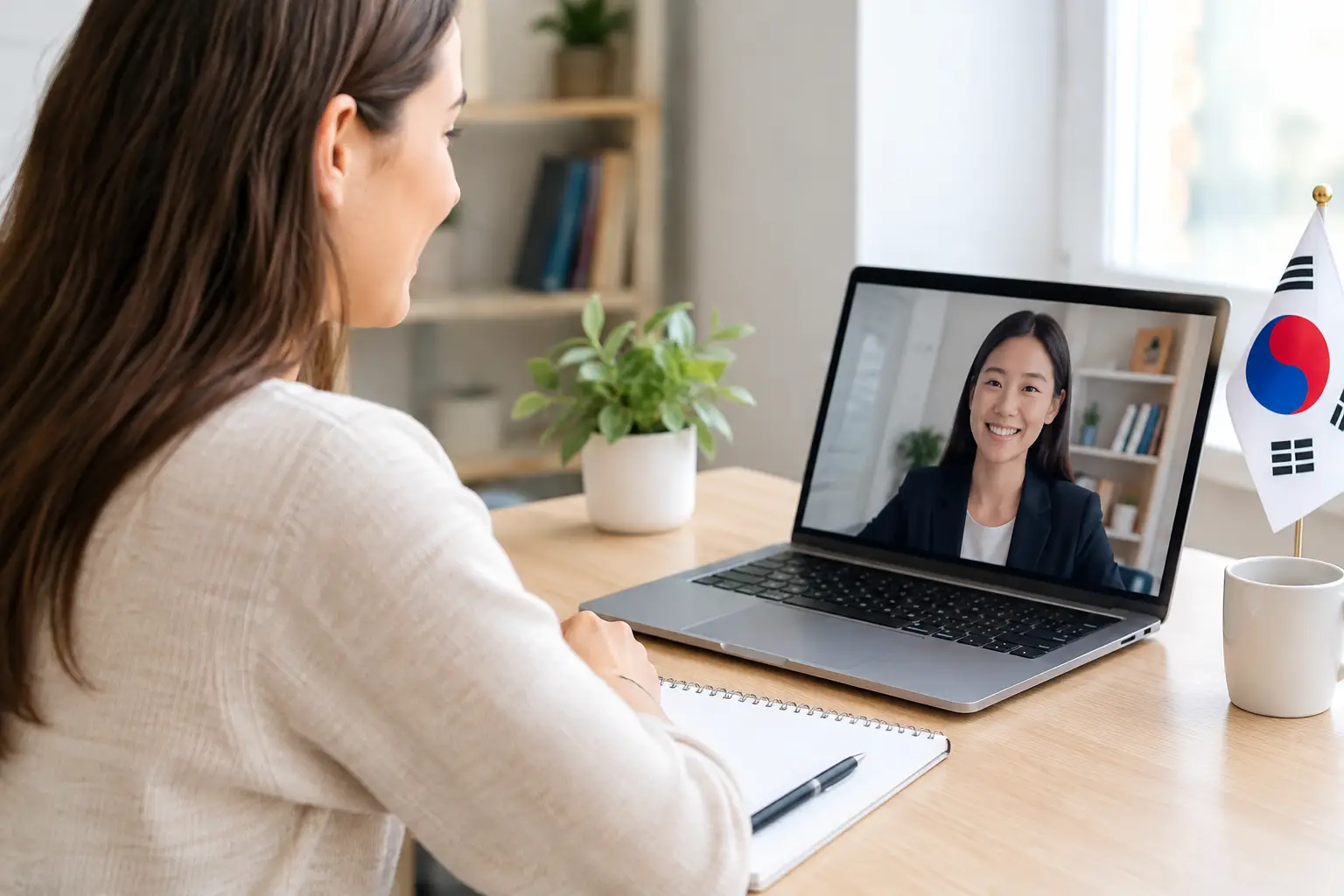
Your flight date can make a teaching job in South Korea feel suddenly real. Planning your Korea teaching departure is the point where an exciting offer becomes a series of practical decisions: which originals to carry, how much cash to bring, what to confirm with your school, and what can wait until you arrive.
The goal is not to pack for every possible situation. It is to leave with the documents, information, and financial breathing room that let you handle the first few weeks calmly. A reputable school and a clear contract give you a strong start, but good preparation helps protect that start when travel plans shift or small surprises come up.
Start With Your Visa and Contract Timeline
Your visa timeline should set the pace for the rest of your departure planning. Do not book a nonrefundable flight until your visa process and start date are confirmed. Schools may have preferred arrival dates, orientation schedules, or housing turnover to coordinate. Arriving too early can create a hotel expense you did not expect, while arriving too late can add pressure before your first day.
Read your contract again before departure, this time as someone about to move rather than someone deciding whether to accept the job. Confirm your school name and address, salary payment date, working hours, housing arrangement, and the person who will meet you or communicate with you after landing. Keep a digital copy of the signed contract, but carry a printed copy as well.
If your school provides housing, ask what will be in the apartment when you arrive. Some furnished apartments include bedding, basic cookware, and small appliances. Others provide only the essentials. Knowing the difference prevents you from using valuable suitcase space on items you can purchase easily in Korea or, worse, arriving without what you need for your first night.
Carry Documents in Your Hand Luggage
Your passport, visa documents, job contract, school contact information, and travel itinerary should never go in checked baggage. Put them in one organized folder that stays with you from check-in through arrival.
It is also sensible to carry copies of your diploma, criminal background check, apostille documents, and any paperwork used during the visa process. You may not need every document immediately, but having copies available can save time if a school, immigration office, bank, or phone provider asks for clarification.
Save clear scans in secure cloud storage before leaving. Give a trusted family member a copy of your itinerary and your school’s main contact details. This is not about expecting a problem. It is about making a lost bag, dead phone, or missed connection easier to manage.
Build a First-Month Financial Buffer
A teaching salary in Korea can support a comfortable routine, but your first paycheck may not arrive as soon as you expect. Your arrival date and the school’s payroll schedule determine when you are paid. If you start late in a pay period, you may receive a partial payment first.
Plan to cover food, local transportation, phone service, household basics, and any unexpected accommodation costs for at least several weeks. The right amount depends on your school’s housing setup and whether airport pickup is provided, but a realistic buffer matters more than an ambitious shopping budget.
Bring more than one way to access money. A travel-friendly debit or credit card is useful, and a modest amount of Korean won can cover immediate needs such as airport rail, a taxi, or food before you have settled in. Tell your bank about international travel so a legitimate transaction does not trigger a security block.
Avoid assuming you can open a Korean bank account on your first day. In many cases, teachers need their Alien Registration Card before completing certain tasks, and that card is obtained after arrival. Your recruiter or school should explain the expected process, but prepare for some steps to take time.
Pack for the Job You Accepted, Not a Vacation
Korea has distinct seasons, and a July arrival requires a different suitcase than a January arrival. Summer is hot and humid. Winter can be very cold and dry, particularly if you are commuting early in the morning. Check the typical weather for your city, not just Seoul, before deciding what earns space in your luggage.
For work, pack enough professional clothing to get through your first two weeks without an urgent shopping trip. School dress codes vary. Some hagwons expect business casual attire every day, while public schools may be more relaxed. If you are uncertain, choose neat, versatile pieces that can be layered and mixed easily.
Bring prescription medication in its original labeled packaging, along with a copy of the prescription or a doctor’s note if appropriate. Check whether your medication has restrictions in Korea before travel. Do not rely on finding the same brand or dosage after arrival.
Electronics require some thought. Korea uses 220-volt power and Type C or Type F plugs. Many laptops and phone chargers handle dual voltage, but check the label before using an adapter. A small plug adapter is useful for the first few days, though converters are only needed for devices that do not support 220 volts.
Leave bulky household goods behind unless they are genuinely difficult to replace. Korea has accessible stores, delivery services, and online shopping once you are established. Prioritize comfortable shoes, essential toiletries for the first week, a small work bag, and a few items that make an unfamiliar apartment feel more like home.
Confirm Arrival Details Before You Board
A smooth arrival often comes down to one message sent a few days before departure. Confirm your flight number, scheduled landing time, terminal if known, and the best emergency contact method. Ask exactly where to meet your pickup contact or whether you should use public transportation or a taxi to reach your housing.
Save the address of your school and apartment in both English and Korean if it is available. A Korean-language address is especially helpful for taxi drivers. Screenshot key instructions on your phone in case airport Wi-Fi is slow or your mobile service is not active yet.
If you are arranging your own route from the airport, review it before you fly. Korea’s airport rail and bus systems are practical and reliable, but carrying multiple suitcases while tired can change what feels practical. A taxi costs more, yet it can be the better choice after a long flight, late-night arrival, or trip to a less central area.
PlanetESL helps teachers coordinate the practical details around approved school placements, including arrival planning and settling-in support. Even with assistance, keep your own notes. You are the person who will need the address, contact number, and backup plan when your plane lands.
Prepare for Your First Week, Not Your Whole Year
Your first week will likely include sleep adjustment, a new commute, phone setup, a meeting with school staff, and unfamiliar errands. Keep expectations modest. You do not need to understand every neighborhood, banking process, or social custom immediately.
Focus first on the basics: learn the route between home and work, locate a grocery store and pharmacy, get a local SIM or phone plan, and identify a nearby convenience store. Download any essential maps, translation tools, and messaging apps before departure, but remember that local coworkers can often give better advice for your specific neighborhood.
Be ready for cultural differences in the workplace. Punctuality, group communication, hierarchy, and parent expectations may feel different from what you have experienced in the United States. Observe before assuming. If something in your schedule, housing, or responsibilities is unclear, ask a direct and respectful question early rather than letting confusion build.
A Departure Plan Gives You Room to Settle In
The best Korea teaching departure plan is not the one with the longest checklist. It is the one that leaves you prepared for the first practical hurdles while giving you room to adapt once you arrive. Keep your documents close, protect your budget, confirm your arrival plan, and allow yourself a little patience. The new routines will come faster than you think.