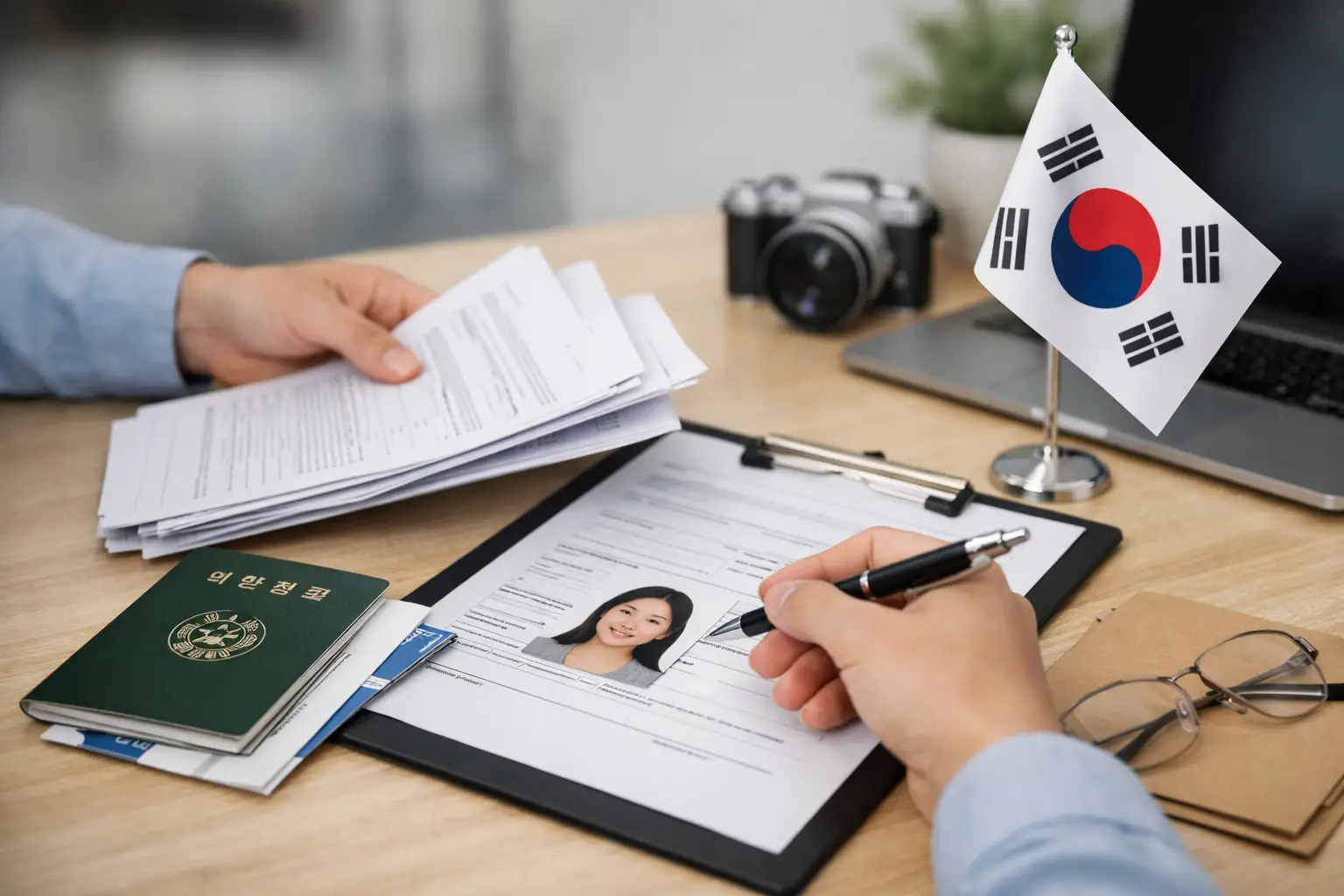
If you are getting ready to teach in South Korea, the visa stage is usually where excitement meets paperwork. Most teachers asking how to submit Korea visa documents are not struggling because the process is impossible. They are struggling because one missing signature, one unsealed envelope, or one document dated too early can slow everything down.
That is why it helps to think of visa submission as a sequence, not a single errand. You are not just handing in papers. You are matching your documents to your school, your visa type, Korean immigration requirements, and the timeline your employer is working under.
How to submit Korea visa documents without delays
For most English teachers, the process starts after you have accepted a job and your school is preparing to sponsor your visa. In many cases, you are applying for an E-2 visa, although some teachers may follow a different route depending on citizenship, job type, or existing residency status. The exact document list can vary, which is why copying a checklist from a random forum is risky.
The safest approach is to confirm three things before you mail or upload anything. First, what your school needs. Second, what the Korean consulate handling your case requires. Third, whether each document must be notarized, apostilled, sealed, or recently issued. Those details matter more than people expect.
A common mistake is assuming that once a document exists, it is automatically valid for submission. That is not always true. A degree copy might need notarization and an apostille. A criminal background check may need to be federal rather than state-level, depending on the requirement you were given. Your passport must also have enough validity left for your contract period. Even when two teachers are heading to Korea at the same time, their document path may not be identical.
Start with the documents schools usually request
Before you submit anything, organize your paperwork into two groups: documents for the employer and documents for the consulate or immigration stage. Some items move through both stages, but thinking this way helps you catch gaps early.
Most teachers are asked for a valid passport, diploma copy, apostilled degree documents, a criminal background check with apostille, signed contract pages, passport-style photos, and completed visa application forms. Your school may also request transcripts, a health statement, or other supporting materials. In some cases, digital scans are reviewed first, and the physical originals are sent later.
This is where timing matters. Background checks and apostilles can take longer than applicants expect, especially during busy hiring seasons. If you wait until your school says, “Send everything now,” you may already be behind. The better move is to begin collecting long-lead documents as soon as you are seriously job searching.
For teachers working with a recruiter, this is usually the stage where practical guidance saves the most stress. PlanetESL, for example, helps teachers understand not just what the list says, but how each item should actually be prepared so it is accepted the first time.
Make sure names and details match exactly
A surprising number of visa delays come from mismatched personal information. Your full name should appear consistently across your passport, degree paperwork, background check, and application forms. If you have a middle name on one document and only an initial on another, ask whether that will be accepted before submitting.
The same applies to dates, addresses, and signatures. If a form asks for your legal name exactly as shown on your passport, use that version every time. Do not assume small differences will be ignored. Sometimes they are. Sometimes they trigger a request for correction, and that can cost you a week or more.
Check whether originals are required
This is one of the biggest it-depends parts of the process. Some schools want scanned copies first for review, while others need physical originals by courier so they can complete sponsorship paperwork in Korea. Later, your local Korean consulate may ask for original documents, printed forms, passport photos, and your actual passport during the visa issuance stage.
Do not send irreplaceable documents casually. Confirm what must be original, what can be a copy, and what needs special certification. If you are mailing materials internationally, use a reliable courier with tracking and keep digital copies of everything.
The actual submission process for most teachers
When people ask how to submit Korea visa documents, they are often talking about two separate submissions. First, you submit supporting documents to your employer or recruiter. Second, after your school receives visa approval paperwork or a visa issuance number, you submit your application to the Korean consulate in your area.
That distinction matters because the first submission helps your employer sponsor you, while the second is what puts the visa in your passport. If you confuse the two, the process feels more complicated than it really is.
In the employer stage, your school reviews your file, confirms it meets current hiring and immigration requirements, and uses it to move your sponsorship forward. If something is missing, you will usually hear about it here. This is the best point to fix problems because once consular submission begins, your travel timeline is often tighter.
In the consular stage, you usually complete a visa application form, provide your passport, submit required photos, pay any applicable fee, and include whatever approval reference or supporting documents the consulate requests. Some consulates allow mailed applications. Others require appointments or in-person submission. Rules can differ by jurisdiction, so always verify the process with the consulate that serves your state.
How to submit Korea visa documents correctly at the consulate
At the consulate stage, accuracy matters more than speed. Rushing through the application form is one of the easiest ways to create avoidable delays. Read each field carefully, especially sections covering passport details, employer information, intended stay, and visa category.
If your school has already given you a visa issuance number or specific sponsor details, enter them exactly as provided. If you are not sure how to complete a field, stop and confirm rather than guessing. A blank field may be acceptable in some cases. An incorrect field can be harder to fix.
Presentation also matters more than many first-time applicants realize. Submit clean, legible documents. Use the required photo size. Make sure forms are signed where needed. If your passport photo standards are outdated or your copies are blurry, you may be asked to resubmit.
Common mistakes that slow the process
The most common issues are not dramatic. They are small errors that pile up. Documents missing apostilles, unsigned forms, old background checks, inconsistent names, wrong photo format, and mailing packets without tracking are all frequent problems.
Another issue is relying on outdated advice. Korean visa procedures can shift, and consulates may apply instructions differently. A forum post from two years ago might still sound useful while being wrong in one critical detail. For something this time-sensitive, current guidance beats crowd-sourced confidence.
Build in extra time where it counts
If your contract start date is close, every delay feels bigger. Give yourself buffer time for background check processing, apostilles, shipping, school review, and consular turnaround. If everything moves quickly, great. If one step stalls, you are still in a workable range.
This is especially important during major hiring periods, holidays, or peak travel seasons. Government processing times are not always predictable, and neither is international mail.
What to do if your documents are rejected or questioned
If a school, recruiter, or consulate says something is missing or invalid, do not panic. Most problems are fixable, but you need to respond clearly and quickly. Ask exactly what needs to be corrected, whether a scan is enough for review, and whether your timeline changes because of the correction.
Try not to argue from memory or from what happened to someone else. Visa officers and school coordinators are working from the version of the requirement that applies to your case. If they say a document needs a newer issue date or a different authentication step, treat that as your current reality and move from there.
It also helps to keep your own file organized. Save scans of every submitted document, note when each item was issued, and track what was mailed and when. That record makes it much easier to fix a problem without starting from zero.
The practical mindset that makes this easier
The teachers who handle this process best are not always the most experienced travelers. They are usually the ones who stay organized, ask precise questions, and avoid assumptions. That matters because the Korea visa process is manageable, but it does not reward guesswork.
If you approach it one document at a time, confirm the current requirements, and submit clean, consistent paperwork, the process becomes much less intimidating. You do not need to know every immigration rule by heart. You just need a reliable checklist, enough lead time, and the discipline to verify details before you send anything.
Getting to Korea starts long before your flight. Handle your documents carefully now, and the move itself feels a lot more like a fresh start than a paperwork scramble.