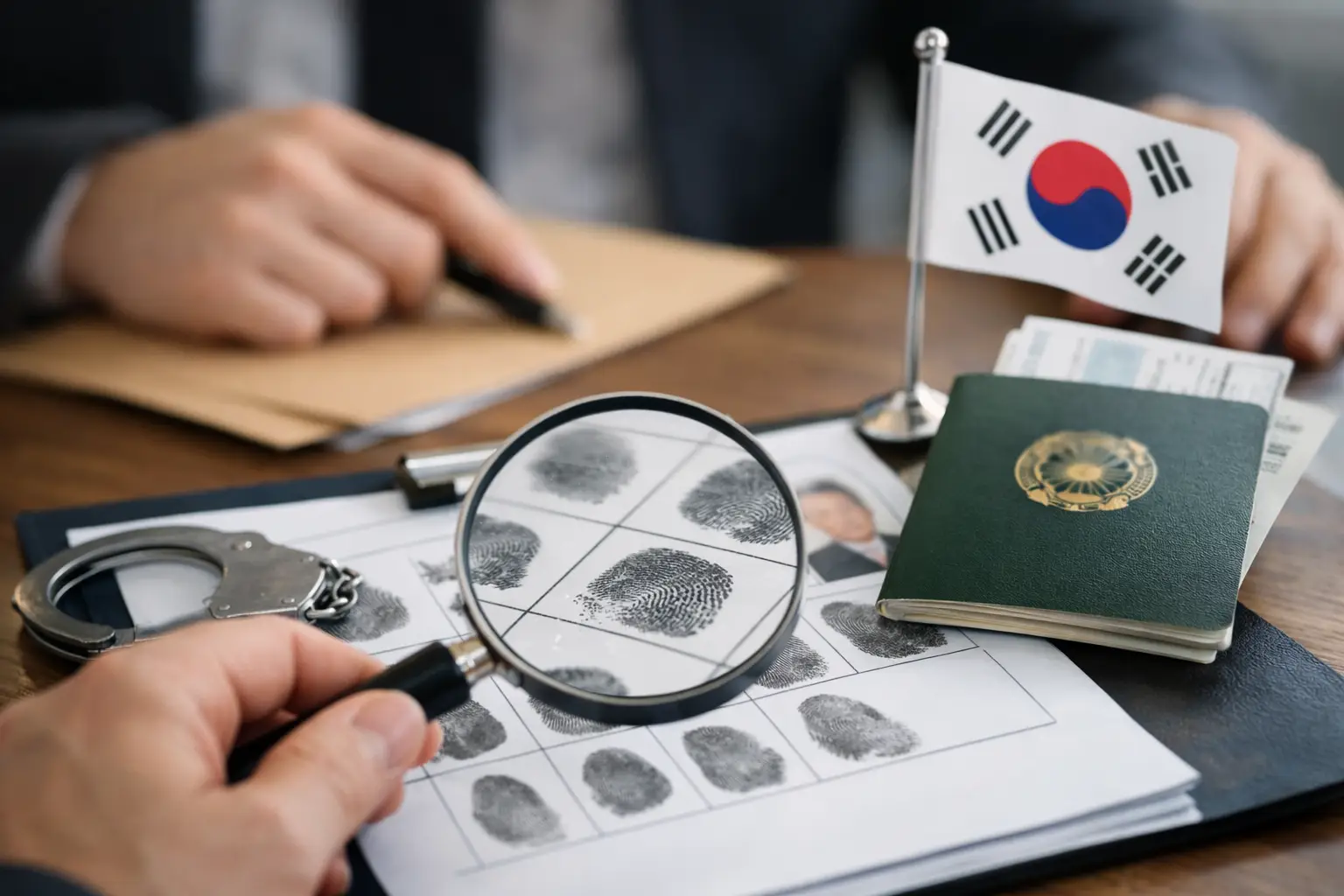
A job offer in South Korea can move quickly right up until your documents hit a snag. One of the most common trouble spots is the criminal background check for Korea visa, especially for first-time teachers who assume any police record printout will work. It will not. Korea is specific about what kind of check you need, how recent it must be, and how it has to be authenticated before immigration will accept it.
If you are applying for an E-2 teaching visa, this document is not a minor formality. It is one of the core pieces in your visa packet, and mistakes here can cost you weeks. In some cases, they can cost you the job if your school needs a teacher by a fixed start date. The good news is that the process is manageable once you know what Korea is actually asking for.
What Korea usually requires
For most English teachers, Korea requires a national-level criminal record check from your home country or country of citizenship, not a simple local or state police clearance. For U.S. applicants, that generally means an FBI Identity History Summary. A city police letter or county check is usually not enough for an E-2 visa.
That distinction matters because applicants often start with the fastest document they can get. It feels efficient, but if the Korean consulate or immigration office rejects it, you end up restarting the process from scratch. A little patience at the beginning usually saves more time than trying to shortcut the requirement.
Korea also typically expects the background check to be recent. Exact timing can vary depending on your school, consulate, and immigration handling, but many employers want the document issued within the past six months. If your job search is still early, it is smart to time your application carefully so the check does not expire while you are interviewing, signing a contract, and preparing your visa issuance number.
The criminal background check for Korea visa is not just the check
This is the part many applicants miss. The criminal background check for Korea visa purposes is usually a two-step document process. First, you obtain the correct national-level check. Then you have that document apostilled, if your country is part of the Hague Apostille Convention.
For U.S. teachers, the apostille is what confirms the authenticity of the federal document for use in Korea. Without it, your background check is often incomplete from a visa standpoint. In other words, you do not just need a clean record. You need a clean record document that has been issued correctly and legalized correctly.
That is why this paperwork can feel more complicated than it first appears. The actual record may come back in a day or two, but if the apostille step is delayed or done on the wrong version of the document, your timeline shifts.
What U.S. applicants usually need to do
If you are a U.S. citizen applying to teach in Korea, the standard path is fairly straightforward. You request an FBI criminal history check, receive the result, and then submit it for a federal apostille. Depending on how you apply and whether you use electronic fingerprints or a channeler where permitted, the timing can vary a lot.
Some applicants receive results quickly but then lose time waiting for the apostille. Others spend the most time at the fingerprint stage because poor prints are rejected and need to be redone. If you are on a tight hiring schedule, that is why it helps to start early rather than waiting until after your final interview.
A practical point here: always confirm whether your employer wants the original apostilled document, a notarized copy, or both for initial review. Schools often ask for scans first so they can begin processing, but Korean immigration or the consulate may still need the physical original later. Treat the original as a critical document and keep it in good condition.
Common mistakes that cause delays
The biggest mistake is ordering the wrong level of check. A local police certificate may look official, but Korea generally wants the national record. The second common mistake is forgetting the apostille or assuming notarization alone is enough. It usually is not.
Another issue is timing. If you order your background check too early, it may no longer be considered current by the time your visa application is filed. If you order it too late, your school may have to push your start date. There is no perfect universal timeline because hiring schedules differ, but many teachers do best by starting the process once they are seriously applying or interviewing, not months before and not after everything else is done.
Name mismatches can also create unnecessary problems. If your passport, diploma, and criminal check do not match exactly because of a middle name, suffix, or name change, address that early. What feels like a small inconsistency can trigger questions from a school or consulate that slow down document approval.
What if you have a record
This is where general advice stops being useful and case-specific advice matters. Not every record is treated the same way, and not every issue leads to an automatic denial. It depends on the offense, how it appears on the report, how long ago it occurred, and how Korean immigration interprets it.
If something may appear on your background check, the smartest move is to raise it early with your recruiter or visa advisor rather than hoping it will be ignored. Schools do not like surprises, and neither do immigration officers. In some situations, an old or minor issue may still allow you to move forward. In others, it can become a serious barrier to visa approval.
What you should not do is guess, hide information, or submit incomplete explanations. A clear answer early in the process is always better than a canceled placement after contract signing.
How this fits into the larger E-2 visa timeline
Your criminal record check is only one part of the document package, but it is one of the few items that can take longer than expected. Degree copies, transcripts, passport scans, signed contracts, and passport photos are important too, yet those are often easier to replace or resend. The background check has more moving parts.
That is why experienced recruiters usually talk about it early. A school may be ready to hire you, but if your criminal check and apostille are not in progress, your file can stall. For teachers trying to arrive for a specific semester start, even a short delay matters.
In practice, the best approach is to think of this document as part of your job search, not as paperwork you handle after you get hired. The earlier you understand the requirement, the easier it is to line up interviews, contracts, and visa processing without last-minute stress.
How to keep the process simple
Start by confirming the exact requirement tied to your nationality and visa type. Most teachers heading to South Korea for classroom roles need the E-2 route, but details can differ if you have already lived abroad, hold dual citizenship, or are applying from outside your home country.
Next, build in buffer time. Even when government systems are moving normally, fingerprints can be rejected, mailed documents can take longer than expected, and apostilles can create a bottleneck. If your start date is important, assume the process may take longer than the fastest estimate you see online.
It also helps to keep digital and physical copies organized. Save scans of the issued background check, the apostilled version, and any instructions your school provides. When a document question comes up, and it often does, you will be able to answer quickly instead of searching through email threads and envelopes.
For teachers working with PlanetESL, this is exactly the kind of document step where experienced guidance makes a difference. A lot of visa stress comes from preventable mistakes, not from the rules themselves.
Criminal background check for Korea visa FAQs
One common question is whether an expunged or sealed record will appear. The answer depends on the jurisdiction and the type of record search, so there is no safe universal assumption. If you have a concern, check before you submit anything.
Another question is whether digital results are acceptable. Sometimes schools can review scans to get the process started, but immigration and consular handling often still depend on the proper authenticated document set. You should not assume a PDF alone will satisfy the final requirement.
Applicants also ask whether they need a new check every time they change jobs in Korea. That depends on your visa status, employer change, and current immigration rules. Some situations may require updated documentation, while others may not. It is always better to verify based on your exact move rather than rely on what another teacher experienced a year ago.
Paperwork for Korea is rarely hard because it is mysterious. It gets hard when one missing detail throws off the schedule. If you treat your background check as a priority early on, you give yourself a much smoother path to the part that actually brought you here – teaching, settling in, and starting your life in Korea.